Will AI Replace Appraisers? Here's What USPAP Actually Says
You watched the demo. An AI analyzed a property, pulled comps, wrote a narrative, and produced something that looked disturbingly like an appraisal report. In about four minutes.
Your first thought wasn't "that's cool." Your first thought was "they won't need me anymore."
That thought is circulating in every appraiser Facebook group, every forum thread, every quiet conversation at association meetings. Usually it's phrased as a worry, not a question: "I'm starting to think they won't need us."
The fear is understandable. But the answer from the organizations that write your professional standards is unusually clear.
The Direct Answer
No. AI will not replace appraisers.
Not because the technology isn't impressive - it is. Not because the industry is resistant to change - it's not (UAD 3.6 proves that). But because the foundational role of a real estate appraiser - exercising professional judgment based on physical observation, market analysis, and independent certification - cannot be performed by a machine under the regulatory and legal framework that governs this profession.
The Appraisal Foundation, through the Appraisal Standards Board, has stated it plainly: "The appraiser, not the machine, is ultimately responsible for credible, ethical appraisal results." (Appraisal Foundation AI Webinar)
That's not a suggestion. It's the standard that governs every appraisal submitted in the United States.
What USPAP Requires (And Why AI Can't Provide It)
USPAP isn't ambiguous about this. Here's how each major rule relates to AI.
Ethics Rule: The appraiser must not communicate a misleading appraisal. AI-generated content must be verified for accuracy before inclusion in any report. You're ethically responsible for every word, every number, and every conclusion in the report - regardless of whether an AI helped produce it. If the AI wrote a market summary with factual errors (which has happened), and you included it without verification, that's your ethical violation.
Competency Rule: You must understand the tools you use. If you're using AI to draft narratives, you need to understand what the AI does, how it works, and where it can go wrong. Blindly accepting AI output violates the Competency Rule just as surely as blindly accepting data from a source you don't understand.
Scope of Work Rule: The use of AI must be appropriate for the assignment and documented as part of your scope decisions. This means acknowledging that AI was used and how - not hiding it.
Record Keeping Rule: When AI is involved, your workfile should include documentation of the inputs and outputs - what you asked the AI, what it produced, and what you changed. Screenshots, prompts, or similar records. This creates the audit trail that proves you reviewed and verified everything.
Certification: You sign the report. You certify the analyses, opinions, and conclusions. Not the AI. Not the software company. You. Your license. Your reputation. Your legal responsibility.
The summary: USPAP allows AI as a tool. It prohibits AI as a replacement. The line is drawn at professional judgment and personal certification - and that line isn't moving.
The Work AI Cannot Do
Beyond the regulatory framework, there are practical realities that make AI replacement impossible for the core appraisal function.
Physical inspection. AI can't walk through a property. It can't notice that the "updated bathroom" in the listing photos actually has water damage behind the toilet. It can't observe that the basement has a musty smell suggesting moisture issues. It can't stand in the backyard and notice that the adjacent property's retaining wall is failing. The inspection is a physical, sensory, judgment-intensive process that no camera or data feed can replicate.
Local market knowledge. AI can pull comparable sales from a database. It can't know that the neighborhood across the highway commands a $20,000 premium because it's in a different school district. It can't know that the house on the corner sells for less because of traffic noise that doesn't show up in any dataset. It can't know that the subdivision completed in 2019 has foundation issues that haven't appeared in public records yet. You know these things because you live and work in this market. AI doesn't.
Professional judgment under ambiguity. Appraisal isn't a formula. It's a professional opinion formed by weighing evidence that doesn't always point in the same direction. When one comp suggests $350,000 and another suggests $380,000, the reconciliation requires judgment about which evidence is more relevant, more reliable, and more applicable. AI can crunch numbers. It can't exercise judgment under uncertainty.
Courtroom testimony. For estate, divorce, and litigation work - the highest-paying segment of the appraisal market - the appraiser may need to testify as an expert witness. No AI can sit in a courtroom, answer questions from opposing counsel, defend its methodology under cross-examination, and maintain credibility with a judge or jury. Expert testimony requires a human professional, full stop.
The Real Threat (And It's Not What You Think)
The real threat to individual appraisers isn't AI replacing the profession. It's the productivity gap between appraisers who use AI as a tool and those who don't.
An appraiser using AI report prep tools spends less of each report on drafting and data entry. The AI-assisted appraiser is either doing more work at the same fee or doing the same work in fewer hours.
With the appraiser workforce shrinking and UAD 3.6 adding complexity, the appraisers who can work efficiently will be in higher demand. The ones who reject all technology and grind through every report manually will face increasing pressure as deadlines get tighter and competitors get faster.
AI won't replace you. But an appraiser who uses AI effectively will outperform an equally skilled appraiser who doesn't. That's the competitive dynamic worth paying attention to.
The "AI-Proof" Work
There's a category of appraisal work where the AI replacement concern is essentially zero.
Non-lender work - estate valuations, divorce appraisals, tax appeals, expert witness testimony - requires the full range of human professional capabilities: physical inspection, independent judgment, courtroom credibility, direct client communication, and the ability to defend your conclusions to an attorney, a judge, or a jury.
No lender, no attorney, and no court will accept an AI-generated appraisal for these purposes. The value of the human professional in these contexts isn't just practical - it's legal. The report needs a licensed appraiser's certification. The testimony needs a human on the witness stand. The client needs a professional they can call, question, and trust.
Building your non-lender practice isn't just a fee strategy. It's a career durability strategy. The more of your work that involves direct professional relationships and courtroom-ready analysis, the less vulnerable you are to any technology shift - AI or otherwise. (Full guide to building non-lender clients.)
How to Think About AI Going Forward
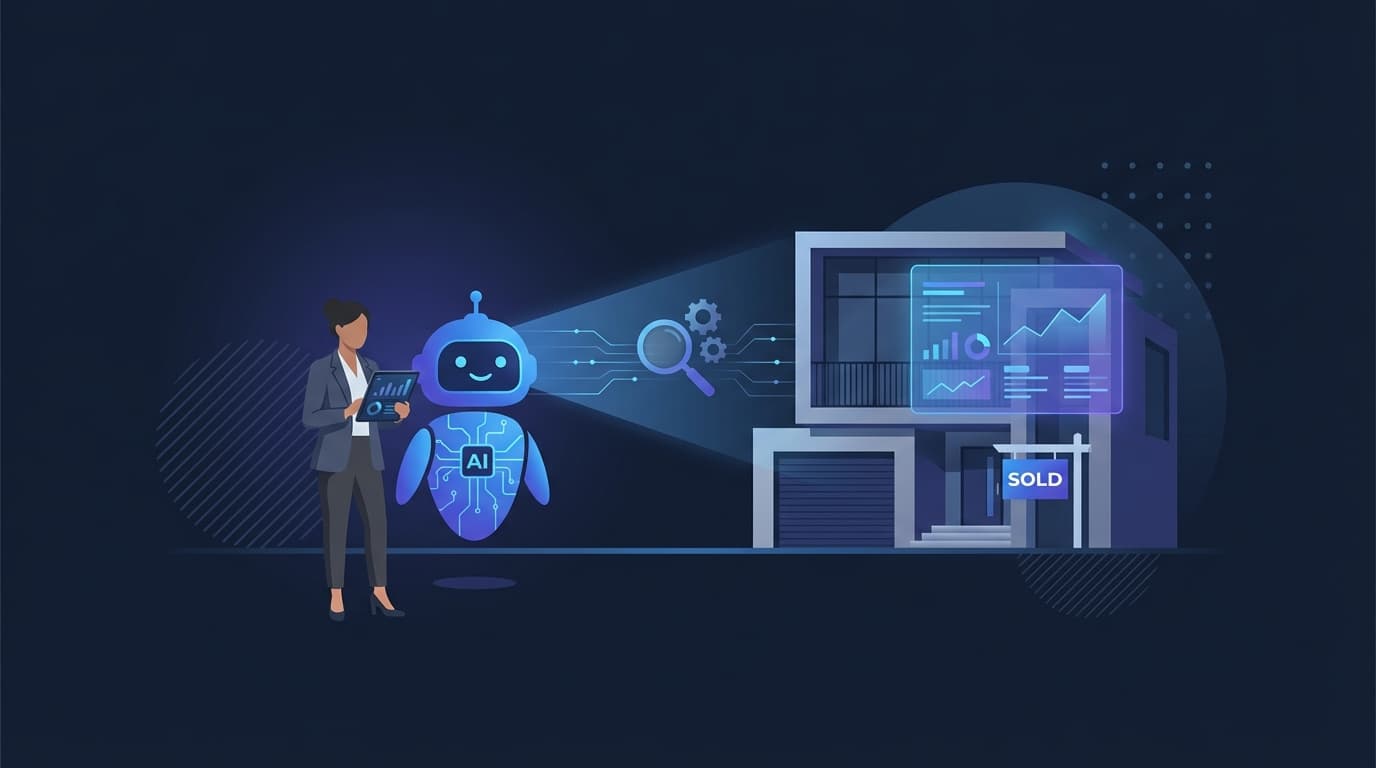
The conversation isn't "AI versus appraisers." It's "AI plus appraisers."
AI handles the repetitive documentation work: drafting narratives, organizing photos, pulling property data, formatting reports. You handle the professional work: inspecting, analyzing, judging, certifying, and communicating with clients.
The recommended approach, from the Appraisal Foundation itself: "Leveraging AI for its computational power while applying human expertise to interpret and validate the results." That's the hybrid model. And it's how every AI feature inside Appraiser Machine was designed - AI generates, you review, you approve. The AI never signs the report. You do.
The appraisers who thrive over the next decade won't be the ones who ignored AI. And they won't be the ones who blindly trusted it. They'll be the ones who used it as a tool - like every other tool in their practice - with skill, judgment, and professional responsibility.
Related Articles:

Jon Barrett
Jon Barrett is the founder of Appraiser Machine and has spent over a decade working with independent appraisers. He's built 300+ appraiser websites, co-led a national appraiser mastermind group, and talked with hundreds of appraisers about what's actually working in their practices. He built Appraiser Machine because the operations side of running an appraisal practice was still stuck in spreadsheets and duct tape - and appraisers deserved better.