

How to Get Estate Attorney Clients as a Real Estate Appraiser
Somewhere in your county right now, an estate attorney is Googling "real estate appraiser near me" because they have a probate case that needs a date-of-death valuation by next month. The property is worth $450,000. The attorney's client will pay $650 for the appraisal without negotiating.
The attorney can't find you. So they call the first appraiser whose website mentions estate work. That appraiser gets the order. You get another $300 AMC assignment instead.
This happens every day. In every market. And it's fixable.
After building 300+ websites for appraisers and co-running an appraiser mastermind for over a decade, I believe estate attorney work is the most accessible non-lender revenue stream for residential appraisers to build. The demand is constant. The fees are strong. The clients are loyal once they find someone they trust. And the barrier to entry isn't skill or experience - it's visibility.
Why Estate Attorneys Are Your Best Non-Lender Client
Every estate with real property requires an appraisal. That's not optional - it's how the IRS determines the property's tax basis for the heirs. The attorney handling the probate needs a date-of-death valuation, and they need it from a certified appraiser.
This creates steady, predictable demand that doesn't fluctuate with interest rates or loan volume. People pass away in every market condition. Estates get settled in every economy.
The fees reflect the specialized nature of the work. Estate appraisals typically pay $500-800, with complex or high-value properties commanding more. There's no AMC in the middle taking a cut. The attorney orders directly, the estate pays directly, and you receive the full fee.
An estate attorney who handles 30-40 probate cases per year has steady demand for appraisals. If even a fraction of those cases involve real property in your area, one relationship can become a meaningful source of recurring work.
The Appraisal Institute noted this in February 2026: non-lender work carries "higher advisory value, shorter cycles, and repeat-client potential." (Appraisal Institute: Non-Lender Opportunities)
Why They Can't Find You (And It's Not Their Fault)
Here's the disconnect I see constantly. Estate attorneys need appraisers. Appraisers want estate work. But the two groups aren't connecting.
The reason is simple: most appraisers have never marketed themselves for estate work. Their website - if they have one - says "residential appraisals" and lists AMCs as their primary clients. Their Google Business Profile doesn't mention estate or probate services. They're not listed in any attorney directory. And they've never introduced themselves to a single estate attorney in their market.
The attorney doesn't know you exist. Not because you're not qualified. Because you've never made yourself findable for the work you want.
Meanwhile, the appraiser in your market who did put "estate appraisals" on their website and sent 10 letters to local probate attorneys is getting the calls. Not because they're better at appraising. Because they showed up.
How to Find Estate Attorneys in Your Market
You don't need a marketing degree for this. You need a list and a letter.
Start with your local bar association directory. Most county and state bar associations maintain searchable directories of attorneys by practice area. Search for "estate planning," "probate," "trust," and "elder law." You'll typically find 20-50 attorneys in a mid-size market.
Search Google for "probate attorney [your county]." This gives you the attorneys who are actively marketing their estate practice - they're the ones most likely to have steady case volume.
Check your state's attorney licensing directory. Many state bars allow searching by practice area and location. This catches attorneys the local bar directory might miss.
Ask your existing network. If you've done any estate work at all, the attorney who ordered it may know colleagues who need the same service. A warm referral from one attorney to another is the most effective introduction possible.
The goal is a list of 20-30 estate attorneys in your market. Not 200. Twenty to thirty. You're building relationships, not running a mass marketing campaign.
Appraiser Machine's built-in prospecting tools automate this search - enter your area and the system finds estate attorneys, divorce lawyers, and CPAs with verified contact information. But even without software, the manual approach works. The directories are public. The information is there.
The First Contact (Keep It Simple)
The introduction that works best is also the simplest. A professional letter or email that says three things: who you are, what you specialize in, and that you're available.
Here's a template that I've seen work consistently across hundreds of appraisers:
Subject: Estate Valuation Services for [County] Properties
Dear [Name],
I'm a Certified Residential Appraiser with [X] years of experience in [City/County]. I specialize in providing date-of-death valuations for estate and probate matters.
My estate clients appreciate clear, defensible valuations with court-ready documentation, delivered within 5-7 business days. I understand the specific requirements for estate appraisals including retrospective valuations and IRS compliance.
I'm currently accepting new estate matters. May I send you my credentials and fee schedule?
Best regards, [Your name] [Credentials] [Phone]
That's it. No hard sell. No marketing gimmicks. A professional introduction from one professional to another.
In our experience, response rates on letters like this vary — but if you send 20 well-targeted letters, even a few responses can start the pipeline. Not all of those become clients immediately. But attorneys keep these introductions on file, and when they need an appraiser three months later, yours is the name they find.
The Follow-Up System (Where Most Appraisers Stop)
Here's the pattern I see over and over: an appraiser sends 10 letters, gets two responses, does one appraisal, and then... stops. No follow-up. No second round of outreach. The initial effort dies.
The appraisers who build substantial estate practices treat outreach as an ongoing system, not a one-time event.
A simple follow-up rhythm that works: send the initial letter or email. Follow up with an email one week later. If no response, make a brief phone call in week three. Then add them to a quarterly check-in list. Every quarter, send a brief market update or a note reminding them you're available for estate valuations.
The attorneys who don't respond to your first letter aren't rejecting you. They're busy. They don't have a probate case this week. But when one comes in next month, the appraiser who followed up is the one they remember.
Consistency beats intensity. Four hours per month of steady outreach - 10 new letters, follow-ups on previous contacts, a quarterly update to your growing list - builds a pipeline that compounds over time.
What Estate Attorneys Actually Care About
This is where a lot of appraisers overcomplicate things. You don't need to be a probate expert. You need to deliver on four things:
Reliability. Deliver the report when you said you would. This matters more to attorneys than almost anything else because they have court deadlines and probate timelines.
Court-ready documentation. The report needs to be thorough enough to withstand scrutiny if challenged. Detailed property documentation, clear methodology, and defensible conclusions.
Date-of-death expertise. Estate appraisals often require retrospective valuations - what was the property worth on the date of death, which may be months or years in the past. If you haven't done retrospective valuations before, it's worth understanding the methodology before marketing yourself for this work. It's not dramatically different from current market value work, but the effective date and available data considerations are distinct.
Direct communication. Estate attorneys want to talk to the appraiser, not an office manager or an AMC portal. They want to ask questions about the property and get answers from the person who inspected it. This is the opposite of the AMC model - and it's one of the reasons the work is more satisfying for most appraisers.
The Compound Effect
The reason estate attorney work is the best entry point into non-lender practice is the compound effect.
One attorney relationship leads to repeat assignments - not one appraisal, but 2-4 per month, every month, for as long as that attorney practices. One satisfied attorney refers you to a colleague. That colleague becomes another recurring source. Within 6-12 months, a modest effort can shift your client mix meaningfully.
One appraiser I worked with in a mid-size Midwest market started with zero attorney relationships. He sent 10 letters a month for three months. By month four, he had two estate attorneys sending regular work. By month eight, those two had referred him to a third. He didn't become a marketing expert. He sent letters and followed up. Your results will depend on your market, your follow-through, and the relationships you build.
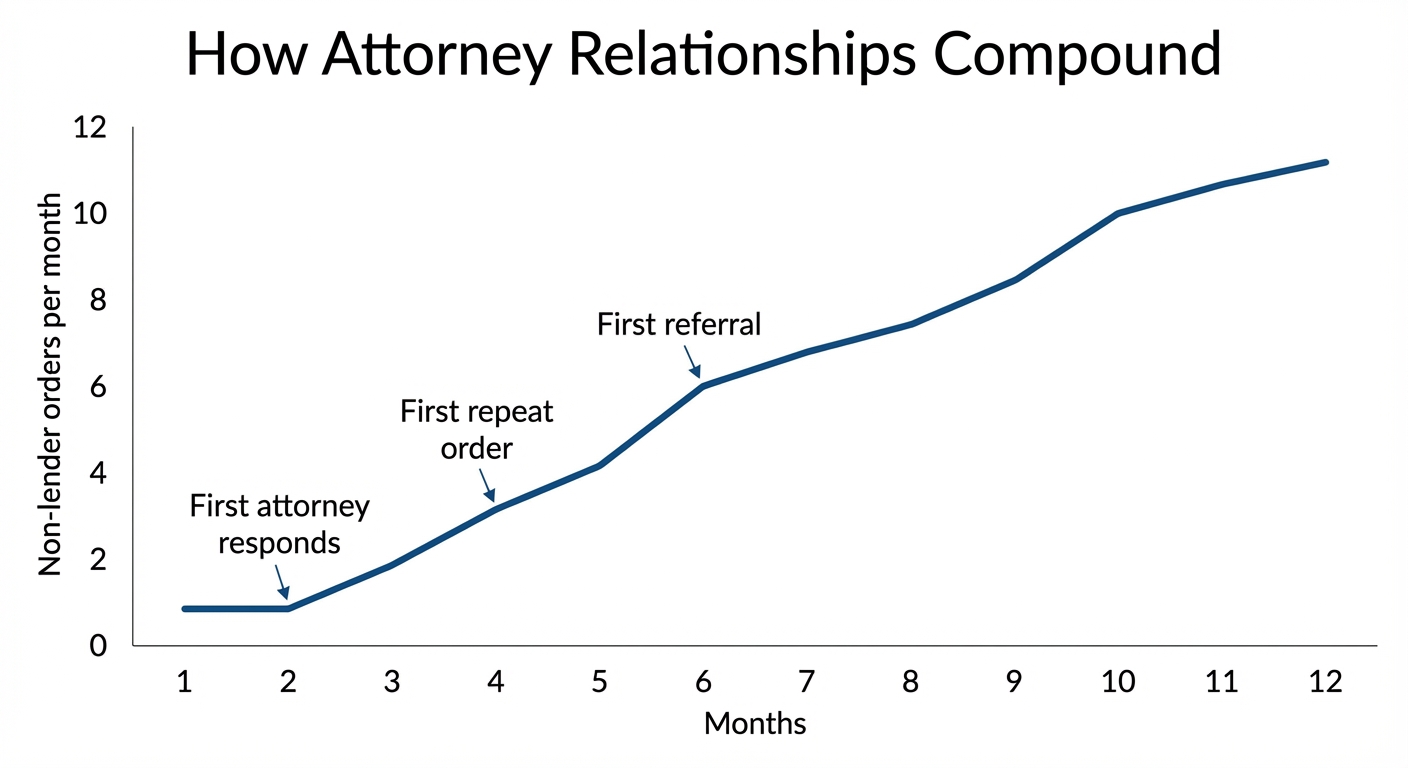
Here's how the math works if it plays out: two estate attorney relationships, each generating a few appraisals per month at $500-700, can add meaningful recurring revenue — with no AMC cut, no bidding wars, and no race to the bottom on fees.
For the broader picture of all seven types of non-lender work (not just estate), see 7 Types of Non-Lender Appraisal Work and What They Pay. For the practical "how to find all types of private clients" guide, see The Appraiser's Guide to Finding Private Clients Who Pay 2x What AMCs Do.
Related Articles:

Jon Barrett
Jon Barrett is the founder of Appraiser Machine and has spent over a decade working with independent appraisers. He's built 300+ appraiser websites, co-led a national appraiser mastermind group, and talked with hundreds of appraisers about what's actually working in their practices. He built Appraiser Machine because the operations side of running an appraisal practice was still stuck in spreadsheets and duct tape - and appraisers deserved better.