
Personal Goodwill vs. Enterprise Goodwill: Why Most Appraisal Practices Are Worth $0
You spend your career valuing other people's assets. Every day, you assess what a property is worth based on physical condition, market data, comparable sales, and professional judgment.
Now turn that lens on your own practice.
If you walked away tomorrow - permanently - what would someone pay to take it over? Not your truck. Not your laser measurer. The practice itself. The client relationships. The revenue stream. The operational know-how.
For most appraisers, the honest answer is uncomfortable: nothing. Not because you haven't built something impressive over 20 or 25 years. But because everything that makes your practice work is locked inside your head. And what's locked inside your head walks out the door when you do.
There's a term for this in business valuation: personal goodwill versus enterprise goodwill. It's the single most important concept for any appraiser within 10 years of retirement, and almost nobody in the appraisal industry is talking about it.
The Concept (You Already Understand It Professionally)
In business valuation, goodwill is divided into two categories.
Personal goodwill is attached to the individual owner. Your reputation in the market. Your relationships with attorneys who call your cell phone. Your fee agreements that exist as handshake deals. Your mental database of which AMCs pay on time and which ones don't. Your "way of doing things" that you've never written down because why would you.
Personal goodwill is non-transferable by definition. When you leave, it leaves with you. A buyer can't purchase your reputation. They can't buy the fact that three estate attorneys trust you specifically. (Exit Strategies Group)
Enterprise goodwill is attached to the business entity. A documented client database with order history and contact information. A Google Business Profile with 30+ reviews generating search visibility. A website ranking for "estate appraiser [your city]." Organized financial records showing three years of revenue by client type. Documented workflows that a new owner can follow on day one.
Enterprise goodwill is transferable. A buyer can step into the systems, inherit the client relationships (because they're documented in a CRM, not in someone's memory), and continue generating revenue from the same sources. (Pacific Business Valuation)
Here's the uncomfortable truth for most appraisers: nearly everything you've built over your career is personal goodwill.
The Table That Should Make You Uncomfortable
| What You Have (Personal Goodwill) | What a Buyer Needs (Enterprise Goodwill) |
|---|---|
| "Everyone knows I'm good" | Documented client database with order history |
| Three attorneys who call your cell | Attorney relationships documented in a CRM |
| Verbal fee agreements | Written fee schedules per client and service type |
| "The way I've always done it" | Documented workflows anyone can follow |
| Your personal phone number | A business presence that transfers (website, Google profile) |
| Your memory of who owes what | Organized invoicing and payment records |
| Your reputation for quality | 30+ Google reviews visible to anyone searching |
| AMC panel relationships | Non-lender client base with recurring revenue |
If most of your practice sits in the left column, the market value of your practice is effectively $0. Not because it doesn't generate revenue. It generates revenue today because you're in it. Remove you, and the revenue disappears within 90 days.
The Valuation Math
Professional service practices typically sell for 25-75% of one year's gross revenue, depending on transferability. (Article 22: Is Your Practice Worth Anything?)
A practice doing $200,000/year in gross revenue could theoretically sell for $50,000-$150,000. The range is enormous because it depends almost entirely on how much of the practice is personal goodwill versus enterprise goodwill.
At the bottom of the range (0-25% of gross): 80%+ AMC revenue, no CRM, no website, no documented processes. Essentially unsellable. The buyer would inherit nothing they couldn't build themselves.
At the middle (25-50%): 50/50 AMC and private clients, some systems in place, some Google reviews. There's something to transfer, but it requires significant buyer effort.
At the top (50-75%): 40%+ non-lender clients documented in a CRM, organized financial records, 25+ Google reviews, a website generating leads, documented workflows, and ideally a team that operates without the owner as bottleneck.
The difference between the bottom and the top of that range, for a $200K practice, is the difference between walking away with nothing and walking away with $100,000-$150,000.
Businesses with recurring revenue - which includes non-lender client relationships that repeat (estate attorneys, divorce lawyers, CPAs who send work every quarter) - command 2-3x higher valuations than businesses with one-time or unpredictable revenue. (ClearlyAcquired) Your AMC assignments are the opposite of recurring revenue. They're unpredictable, non-transferable, and controlled by someone else. Your attorney relationships are recurring, transferable (if documented), and controlled by you.
The Irony Appraisers Don't See
You spend your career valuing other people's assets. You assess condition, quality, market position, and transferability. You assign values with professional precision.
But you've never applied that same analysis to your own practice.
If a property came across your desk with no documentation, no maintenance records, no title clarity, and the owner said "trust me, it's worth a lot" - you'd adjust accordingly. You'd note the risk factors. The absence of documentation. The inability to verify the claims.
Your practice, right now, is that property. Lots of value created over decades. Almost none of it documented. And the owner saying "trust me, it's worth something" without any transferable evidence.
The Conversion: Personal → Enterprise
The good news: personal goodwill can be converted into enterprise goodwill. It's not a binary. It's a spectrum, and you can move along it deliberately.
Every time you enter a client's contact information into a CRM instead of keeping it in your phone, you convert a piece of personal goodwill into enterprise goodwill.
Every time a client leaves a Google review, your personal reputation becomes documented, public enterprise goodwill that transfers with your Google Business Profile.
Every time you send an invoice through a system instead of a Word document, you create a financial record that proves revenue to a buyer.
Every time you build a non-lender relationship through systematic outreach instead of casual networking, you build a revenue source that's documented, trackable, and transferable.
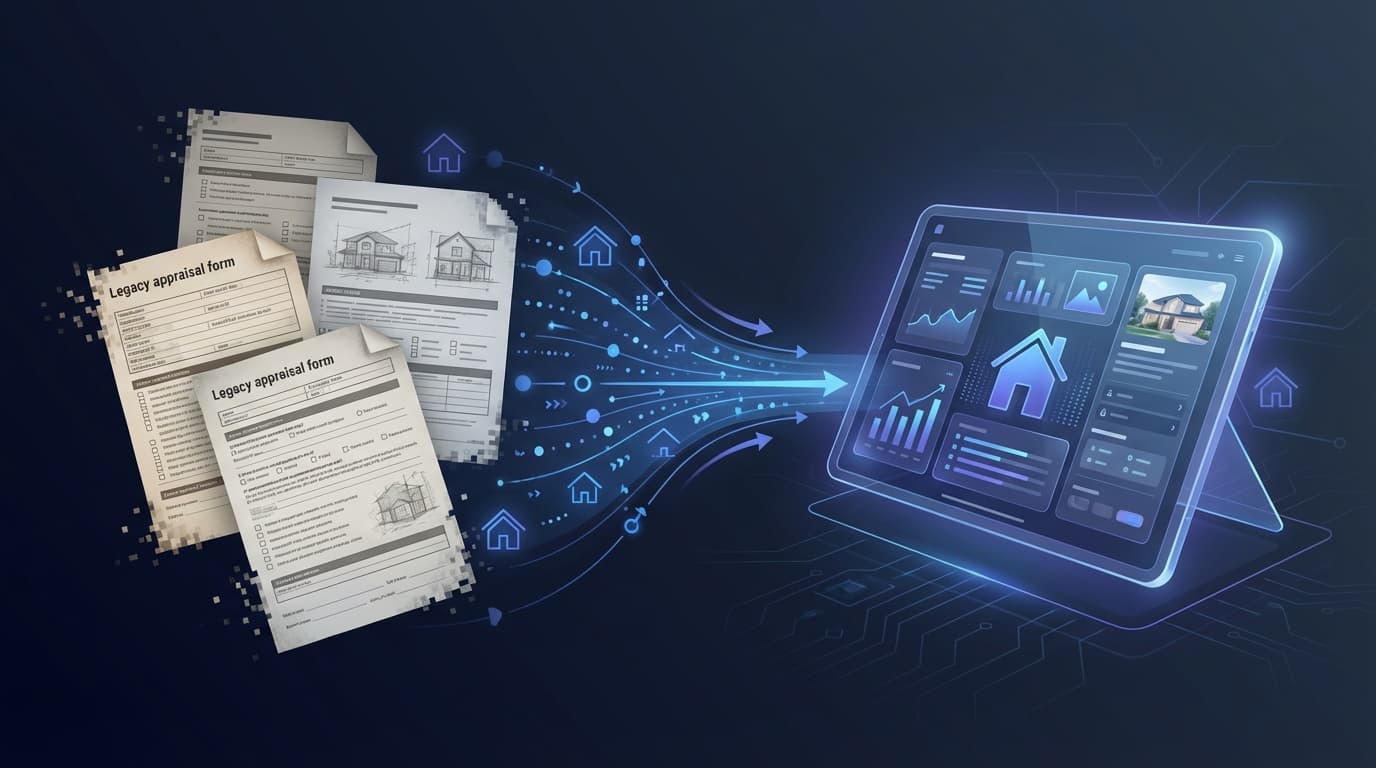
This is what Appraiser Machine does at every level. The CRM captures client relationships. The order system documents workflows. The invoicing creates clean financial records. The Google review automation builds documented reputation. The route optimizer and mileage tracker create operational records. The dashboard makes practice performance visible at a glance - to you today, and to a buyer tomorrow.
Every feature converts personal goodwill into enterprise goodwill. Not as a secondary benefit. As the structural outcome of running your practice through an organized system instead of through your memory.
The Timeline That Matters
Data from Elocus suggests that business owners who begin exit planning 3-5 years before they want to sell can see meaningfully higher valuations compared to those who start when they're ready to walk out the door. (Elocus)
If you're 5-10 years from retirement, the conversion from personal to enterprise goodwill is still very achievable. You have time to build the documentation, the online presence, the client base, and the systems that make a practice transferable.
If you're 2-3 years out, the window is narrower but not closed. The most impactful moves - getting clients into a CRM, building Google reviews, diversifying revenue away from AMCs - can produce meaningful enterprise goodwill in 12-18 months.
If you're already at the point of wanting to stop, you're likely too late to build significant transferable value. Which is why this conversation matters now, not later.
The even-if-you-never-sell angle: the same things that make a practice sellable (organized systems, documented clients, diversified revenue, clean books) are the same things that make it more profitable and less stressful right now. You don't have to be planning an exit to benefit from enterprise goodwill. You just have to be running your practice like a business instead of a job.
Because 25 years of work should be worth something.
Related Articles:

Jon Barrett
Jon Barrett is the founder of Appraiser Machine and has spent over a decade working with independent appraisers. He's built 300+ appraiser websites, co-led a national appraiser mastermind group, and talked with hundreds of appraisers about what's actually working in their practices. He built Appraiser Machine because the operations side of running an appraisal practice was still stuck in spreadsheets and duct tape - and appraisers deserved better.