You're Not Behind on Reports. Your Practice Is Behind on Systems.
It's 6:15 PM. You told your family you'd be done by 6. You're staring at your laptop, and you're not writing a report. You're entering mileage from today's inspections into a spreadsheet you'll need in April for taxes. Before that, you were looking up a client's phone number in your email because it's not saved anywhere searchable. Before that, you were manually creating an invoice in Word for the estate appraisal you delivered this morning.
None of that is appraisal work. All of it took 45 minutes. And it happens every single day.
After working with appraisers for over a decade, I see this pattern constantly. The appraiser isn't behind on reports because they're slow at appraising. They're behind because the operational overhead of running their practice - the tracking, the logging, the invoicing, the scheduling, the driving logistics - is eating hours that should go to the actual work. Or to their family. Or to building the non-lender practice they keep saying they'll get to "when things slow down."
Things don't slow down. Not until the systems catch up.
Where Your Time Actually Goes
If you tracked every 30-minute block of your week honestly - including the stuff you don't count as "work" - you'd find something close to this:
35% - Inspections, report writing, and research. This is the actual appraisal work. The professional skill you spent years developing. Driving to properties, inspecting rooms, pulling comps, writing narratives, forming opinions of value. This is the work that should dominate your week.
20% - Driving and logistics. Driving between inspections, planning routes (or not planning them and backtracking), navigating to properties, sitting in traffic. Most of this is unavoidable, but the inefficiency within it is significant.
20% - Administrative tasks. Invoicing. Mileage entry. Order tracking. Looking up client information. Entering data into QuickBooks that you already entered somewhere else. Scheduling inspections via phone and email. Formatting and sending reports. None of this requires your appraisal expertise. All of it requires your time because there's no system handling it.
15% - Communication and coordination. Emails with AMCs. Calls with clients. Scheduling with homeowners. Following up on unpaid invoices. Responding to revision requests. Coordinating with contractors if you have them.
10% - Strategic work. Building non-lender relationships. Updating your online presence. Reviewing your fee schedule. Planning for UAD 3.6. Thinking about your practice as a business instead of reacting to it as a job.
Look at those numbers. The admin block - 20% of your week - is almost entirely work that a system could handle. And the strategic block - the work that actually grows your practice - is getting whatever scraps are left at the end of the day when you're exhausted.
That's not a time management problem. That's a systems problem.
The Three Traps That Keep You Working Late
Trap 1: You're the only person who knows how anything works.
Where's the client's phone number? In your email. What did you charge the attorney last time? In your memory. Which inspections are scheduled for Thursday? In your calendar, your email, and a sticky note on your monitor. When was the last time this AMC paid you? You'd have to check your bank statements.
Every piece of information about your practice lives in a different place, and the only person who knows where to find all of it is you. That means every task requires you. Not because the tasks are hard, but because the information is scattered.
On AppraisersForum, an appraiser described their system as "TOTAL for reports, email for orders, a spreadsheet for tracking, Google Maps in a separate tab for routes, paper for mileage, and my memory for everything else." Six tools to do one job. None of them talking to each other. All of them requiring manual data entry.
Trap 2: You're doing $25/hour tasks on a $100+/hour schedule.
Here's a painful exercise. Your time is worth at least $100/hour based on what you charge for appraisals. Now look at what you actually did today. Formatting an invoice. Entering mileage. Looking up a property address. Scheduling an inspection by phone when an automated confirmation would have handled it. Re-typing data from an AMC order email into your tracking spreadsheet.
Each of those tasks has a market value of $15-25/hour. You're doing them because "it's faster than setting up a system." That was true the first time. Every subsequent time, it's costing you money.
Trap 3: There's no time left for the work that grows your practice.
The 90-Day Plan to build private clients? It requires 4 hours per week of outreach. Those 4 hours don't exist because they're consumed by administrative tasks that feel urgent but aren't important. Updating your Google Business Profile? It takes 2 hours. You've been meaning to do it for six months. The UAD 3.6 mock report you should complete? It keeps getting pushed because there's always another invoice to send, another route to plan, another payment to chase.
The operational overhead isn't just costing you time. It's costing you the future practice you're not building because there's no time left to build it.
How to Hand the Admin to a System
You don't need to work less. You need to stop doing work that shouldn't be yours.
1. Automate your invoicing. The invoice should generate and send the moment you mark an order as delivered. Not "when you get around to it." Not "Friday afternoon." Automatically, at delivery. It also gets the invoice in front of your client sooner. (Full cash flow strategy here.)
2. Stop planning routes manually. Enter your inspections into a route optimizer and let it find the fastest sequence with live traffic. One click instead of toggling between map tabs. (More on mileage and routes.)
3. Track mileage automatically. The trip log you're not currently keeping (which turns into a reconstruction project at tax time) should happen without you thinking about it. GPS-based tracking tied to your inspection schedule logs every mile at the IRS rate. No glove compartment mileage logs. No January scramble.
4. Put client information in one searchable place. Not email. Not memory. Not a spreadsheet you last updated in October. One database where you can search a client's name and see their contact info, order history, fee agreements, and last communication. When an attorney calls and you can pull up their complete history on the spot instead of digging through email, you look more professional doing it.
5. Stop re-entering data. If you're typing the same property address into your order tracker, your route planner, your mileage log, and your invoice - you're doing the same work four times. A single system where the order creates the route stop, logs the mileage, and generates the invoice from one entry eliminates three rounds of redundant data entry per order.
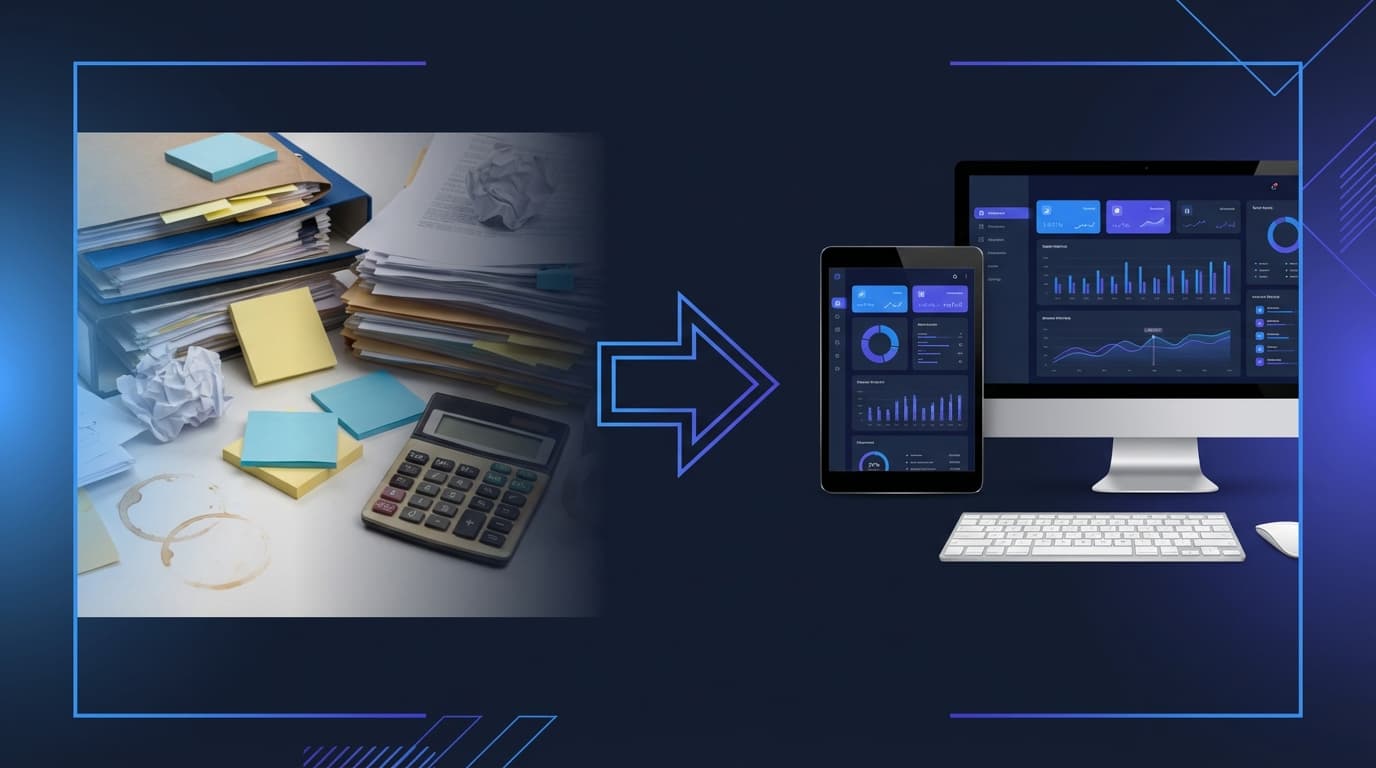
These five changes are exactly what Appraiser Machine was built to consolidate into one system. Orders, clients, routes, mileage, invoicing, and payments — one platform instead of six disconnected tools. The goal: eliminate the manual work that shouldn't require your time in the first place.
What You Do With the Freed-Up Time Matters Most
If that time goes back into more AMC reports, you'll earn more but still be on the same treadmill. If it goes into building non-lender client relationships, updating your online presence, preparing for UAD 3.6, or simply going home at a reasonable hour - that's a different practice and a different life.
One appraiser I worked with was a classic case. She was doing everything herself - order tracking in email, clients in a spreadsheet, invoicing in QuickBooks, mileage on paper, routes in Google Maps. Classic duct tape stack. After moving everything into one system, she freed up enough hours to send attorney introduction letters. The recovered time went to building non-lender relationships — not because she worked more, but because the hours she worked finally went to the right things.
The systems handled the rest.
Your practice isn't behind because you're not working hard enough. It's behind because the operational infrastructure hasn't caught up to the demands you're placing on it. Fix the infrastructure, and the practice you've been planning to build someday becomes the practice you're actually building this month.
Related Articles:

Jon Barrett
Jon Barrett is the founder of Appraiser Machine and has spent over a decade working with independent appraisers. He's built 300+ appraiser websites, co-led a national appraiser mastermind group, and talked with hundreds of appraisers about what's actually working in their practices. He built Appraiser Machine because the operations side of running an appraisal practice was still stuck in spreadsheets and duct tape - and appraisers deserved better.